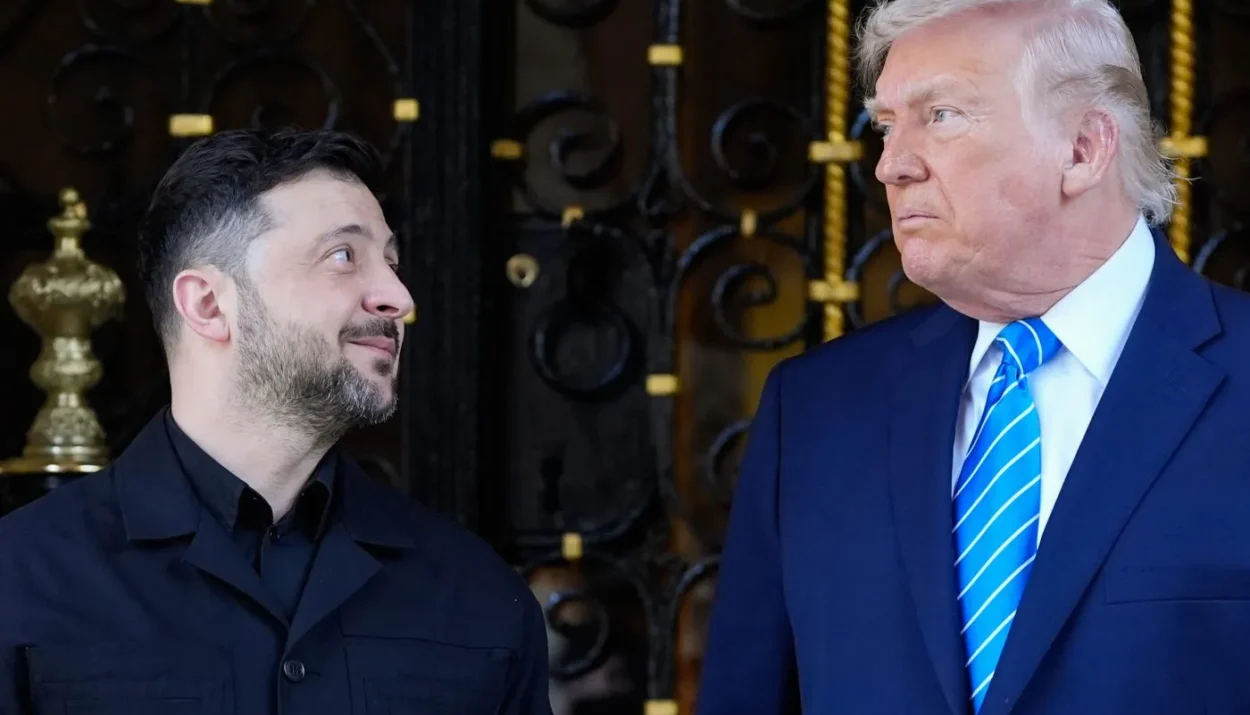
Ukrainian President Volodymyr Zelenskyy revealed on Monday that he has asked U.S. President Donald Trump to support long-term security guarantees for Ukraine—potentially lasting up to half a century. His request goes well beyond the 15-year protection period outlined in the current 20‑point peace proposal designed to deter future Russian aggression.
Zelenskyy discussed the talks, which took place Sunday at Trump’s Mar‑a‑Lago residence in Florida, telling reporters that any direct meeting with Russia would only be possible once the U.S. and European partners agree on a unified framework for peace. He plans to meet with several European leaders in the coming days to continue negotiations.
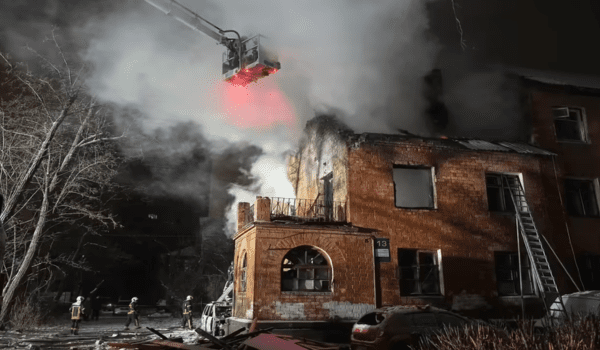
According to reporting from Reuters, Zelenskyy emphasized that any final peace agreement must be approved by Ukrainian citizens through a national referendum. Such a vote, he said, should occur during a 60‑day ceasefire—something he believes Moscow is currently unwilling to consider, given the recent surge in drone and missile attacks on Ukraine.
Trump described the discussions as productive but acknowledged that “one or two very thorny issues” remain unresolved. He suggested that territorial questions are at the center of the impasse, noting that some land “has been taken” and that further changes on the battlefield could complicate future negotiations.
Russia has demanded that Ukraine cede the Donbas region, which remains partially occupied by Russian forces. Kyiv has consistently rejected this demand and insists that no Ukrainian territory will be handed over.
Zelenskyy characterized the meeting with Trump as a “really great discussion,” claiming that security guarantees were “100% agreed.” Trump, however, offered a more cautious assessment when asked about that specific point.
The possibility of a direct Zelenskyy–Putin meeting remains uncertain. Both leaders have previously refused to meet face‑to‑face. Trump said he spoke with Russian President Vladimir Putin by phone on Sunday for two hours, discussing potential peace arrangements. He indicated that Russia did not appear ready to support a ceasefire that would allow Ukraine to hold a referendum.
Kremlin spokesperson Dmitry Peskov said Monday that Moscow had no information about the outcome of the U.S.–Ukraine talks and would wait for a scheduled follow‑up call between Trump and Putin.