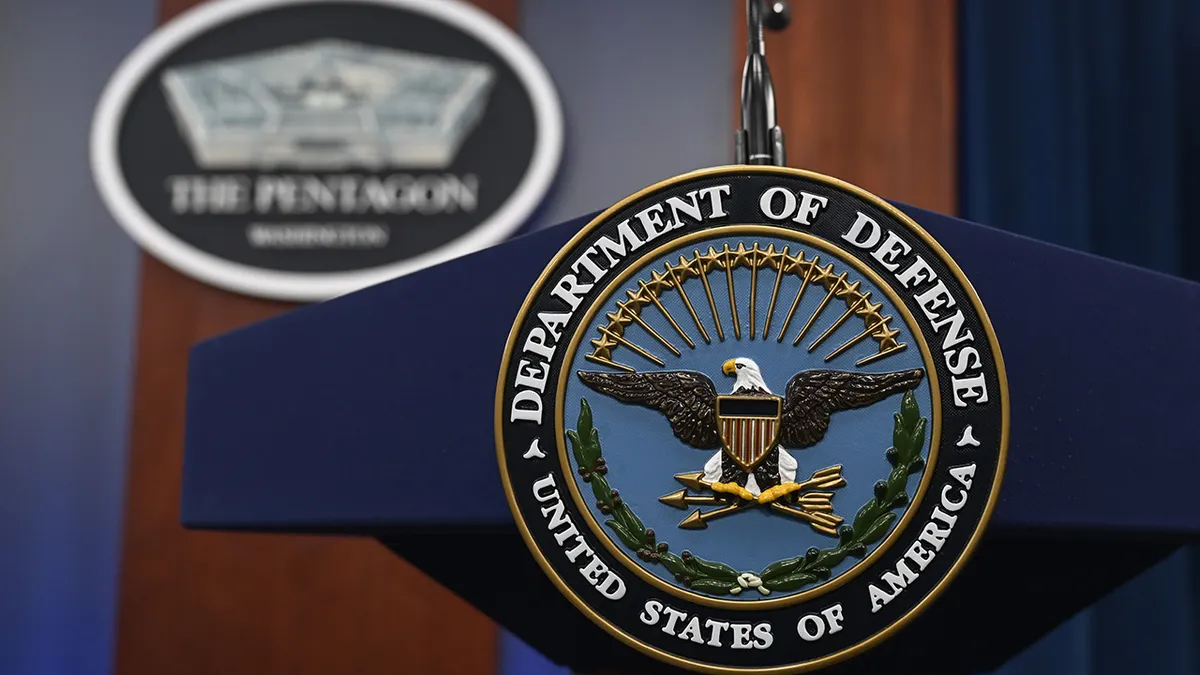
The United States Senate has passed a sweeping $901bn defense policy bill for the 2026 fiscal year, blending priorities of President Donald Trump’s administration with new measures designed to strengthen congressional oversight of military operations.
The National Defense Authorization Act (NDAA) cleared the Senate in a bipartisan 77–20 vote, following House approval in November. It now heads to President Trump for his signature.
Congress Pushes Back on Rapid Troop Reductions
Several provisions in the bill reflect efforts by Democratic lawmakers — joined by some Republicans — to slow any rapid drawdown of US forces abroad.
The legislation requires the Pentagon to keep at least 76,000 US troops in Europe, unless NATO allies are consulted and the administration formally concludes that reductions serve US national interests. The US typically stations between 80,000 and 100,000 troops across Europe.
A similar safeguard prevents troop levels in South Korea from falling below 28,500 without congressional involvement.
Continued Support for Ukraine
Despite political divisions in Washington, Congress reaffirmed its commitment to Ukraine. The NDAA authorizes $800m for the Ukraine Security Assistance Initiative — split into $400m annually over two years — and an additional $400m per year to expand weapons production for Kyiv.
The move signals that lawmakers intend to maintain US support for European security even as the Trump administration pursues a more transactional foreign policy.
Asia-Pacific Priorities and Countering China
The bill aligns with the administration’s national security strategy, which places the Asia-Pacific region at the center of US geopolitical competition.
It allocates $1bn for the Taiwan Security Cooperation Initiative, aimed at strengthening Taipei’s defenses amid rising tensions with China.
Support for Israel and Missile Defense
The NDAA authorizes $600m in security assistance for Israel, including funding for joint missile defense programs such as the Iron Dome. These measures continue to enjoy broad bipartisan backing.
More Oversight of US Military Operations
Lawmakers also expanded reporting requirements for US military activities.
The Pentagon must now provide Congress with additional details on operations targeting smuggling networks in the Caribbean and eastern Pacific — an area where Democrats have demanded greater transparency.
Pressure intensified after a September strike killed two survivors of an earlier attack on a suspected smuggling vessel near Venezuela, prompting calls for clearer oversight of lethal operations.
Repealing Old War Authorizations
In a significant shift, the bill repeals the 2003 Iraq War authorization and the 1991 Gulf War authorization, which lawmakers say will reduce the risk of future military action without explicit congressional approval.
Sanctions Relief for Syria
The legislation also permanently lifts US sanctions on Syria that were imposed under Bashar al‑Assad. Supporters argue the move will help reconstruction efforts following Assad’s removal from power last year.
Cuts to DEI and Climate Programs
Reflecting Trump’s “America First” agenda, the NDAA eliminates diversity, equity, and inclusion offices and training programs within the Department of Defense — changes the House Armed Services Committee claims will save about $40m.
The bill also cuts $1.6bn from Pentagon climate‑related programs, with Republican leaders arguing that defense spending should focus on immediate military readiness rather than long‑term environmental risks.