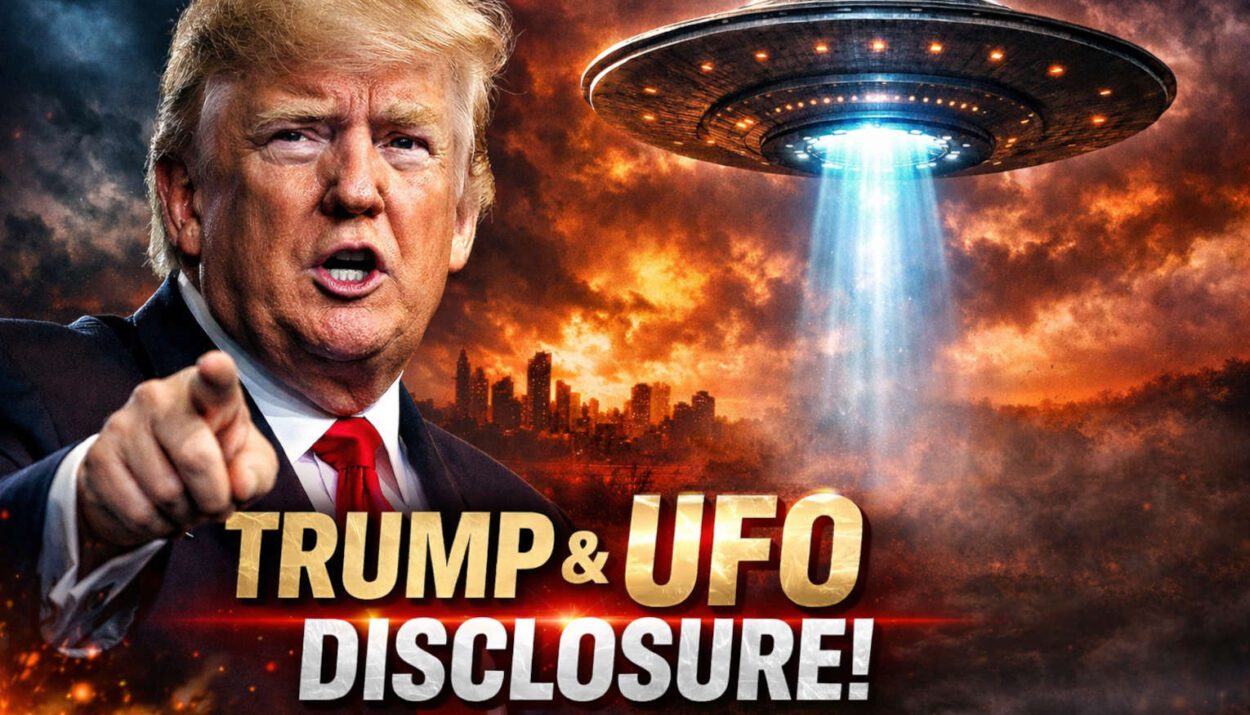
President Donald Trump has renewed public interest in one of the most enduring mysteries in American political culture: unidentified aerial phenomena. In recent remarks, Trump called for the full declassification and release of government files related to UAPs and UFOs, arguing that the American public “deserves to know what’s out there.”
His comments arrive at a moment when UAPs have shifted from fringe curiosity to mainstream policy issue, driven by congressional hearings, Pentagon reports, and testimony from military pilots describing encounters with objects exhibiting unusual flight characteristics.
A Push for Transparency
Trump’s call for disclosure aligns with a growing bipartisan movement in Congress advocating for greater transparency around UAP investigations. Lawmakers from both parties have pressed intelligence agencies to release historical records, citing national security concerns and public interest.
Trump framed the issue as one of government openness, suggesting that decades of secrecy have fueled speculation and mistrust. While he did not specify which documents he believes should be released, his remarks echo earlier efforts by legislators to compel agencies to hand over archival material dating back to the Cold War.
A Long History of Classified Files
The U.S. government has collected information on unidentified aerial sightings for more than 70 years. Programs such as Project Blue Book in the 1950s and 1960s, and more recently the Pentagon’s AATIP and UAP Task Force, have examined thousands of reports. Although many cases have been explained as aircraft, balloons, or atmospheric phenomena, a small percentage remain officially “unresolved.”
In 2021 and 2022, the Office of the Director of National Intelligence released several reports acknowledging that some UAPs appear to demonstrate unusual flight behavior, though no evidence of extraterrestrial technology has been confirmed.
Public Interest at an All‑Time High
Trump’s comments tap into a surge of public fascination with the topic. Polls consistently show that a majority of Americans believe the government knows more about UAPs than it has disclosed. Congressional hearings featuring military whistleblowers have further intensified calls for transparency.
Advocates argue that releasing historical files could help clarify decades of speculation, while skeptics caution that many documents may involve sensitive defense technologies or foreign surveillance programs.
Political and Scientific Implications
While Trump’s remarks have drawn attention, the broader debate extends beyond politics. Scientists and aerospace experts emphasize that clearer data and open research could help distinguish between misidentified objects, foreign drones, and genuinely unexplained phenomena.
Some lawmakers have proposed creating a centralized archive of declassified UAP documents, similar to the JFK Assassination Records Collection, to ensure public access while protecting legitimate national security interests.
What Comes Next
Whether Trump’s call will accelerate declassification efforts remains uncertain. Intelligence agencies have historically been cautious about releasing material that could reveal surveillance capabilities or defense technologies. However, the bipartisan momentum in Congress suggests that pressure for transparency will continue.
For now, the debate over UAPs remains a rare intersection of politics, science, national security, and public imagination—one that shows no sign of fading.