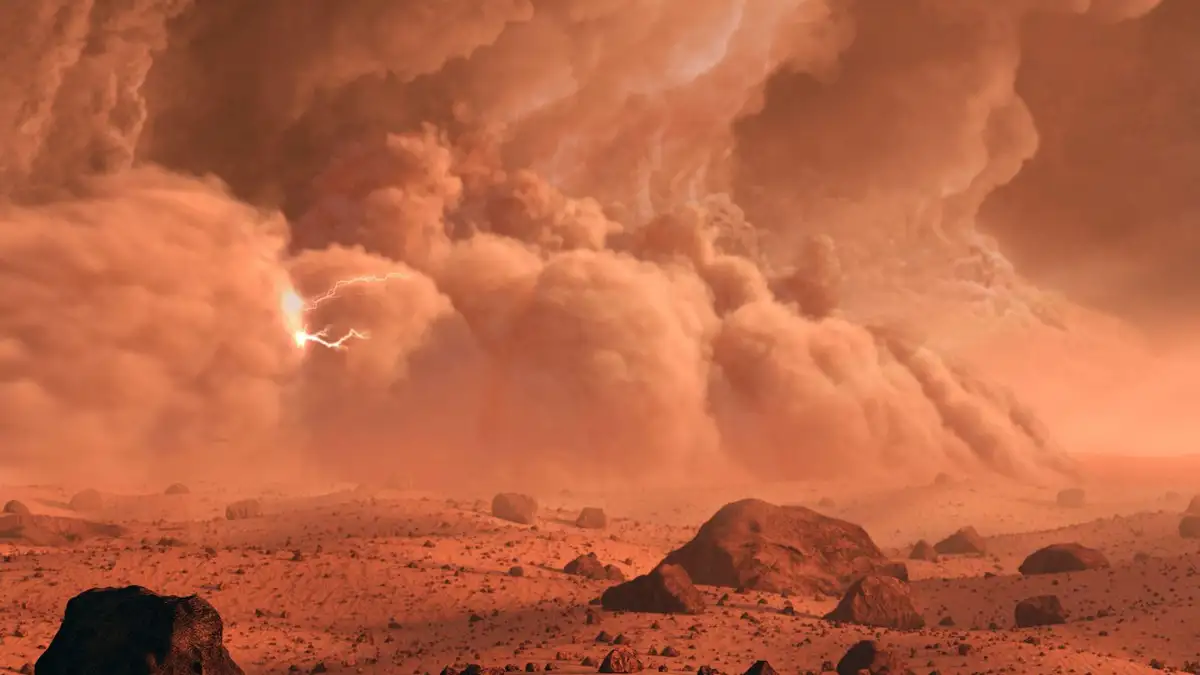
Mars has always been known as a dusty world, but new research shows it is far more electrically active than scientists once believed. A team led by CNRS has confirmed that swirling Martian dust storms generate tiny electric sparks—captured for the first time by the microphone aboard NASA’s Perseverance rover.
These findings reshape our understanding of Martian weather, atmospheric chemistry, and even the risks future astronauts may face.
A First: Hearing Electricity on Mars
While monitoring two passing dust devils, Perseverance’s SuperCam microphone picked up unusually strong acoustic signals. At first, researchers were puzzled. But after analyzing the data, they realized the sounds came from the very heart of the dust devils—and were produced by electromagnetic and acoustic bursts caused by electrical discharges.
Scientists had long suspected that dust storms on Mars might generate static electricity, but this is the first direct evidence of such activity.
How Martian Dust Creates Sparks
The mechanism is surprisingly simple:
Countless dust grains collide and rub against each other inside the storm.
This friction builds up electrical charge.
When the charge becomes strong enough, it releases as tiny arcs—just a few centimeters long.
These arcs create both electromagnetic pulses and faint shock waves that the microphone can detect.
On Earth, similar processes occur in deserts, but our thicker atmosphere makes such sparks rare. Mars, with its thin, carbon‑dioxide‑rich air, requires far less charge to trigger electrical discharges.
Why These Sparks Matter
The discovery has major implications for Martian science:
1. They may explain methane’s mysterious disappearance
Methane has been detected on Mars multiple times, yet it vanishes faster than current models predict.
Electric sparks can create highly reactive oxidizing chemicals—compounds capable of breaking down methane rapidly. This could finally solve one of Mars’ longest‑standing atmospheric puzzles.
2. They may influence Martian climate
Dust plays a central role in shaping Mars’ weather. If electrical charging affects how dust moves or clumps together, it could alter storm behavior and climate patterns across the planet.
3. They pose potential risks for future missions
Electrical discharges could interfere with sensitive electronics on rovers, landers, or human habitats. Understanding these sparks is essential for designing safer equipment.
Listening as a New Scientific Tool
Perseverance’s microphone has been operating daily since 2021, collecting more than 30 hours of audio. It has captured everything from wind gusts to the whir of the Ingenuity helicopter—and now, the first recorded electrical activity on another planet.
This study highlights how sound can reveal hidden processes that cameras and sensors might miss. By “listening” to Mars, scientists are uncovering a new layer of planetary behavior.