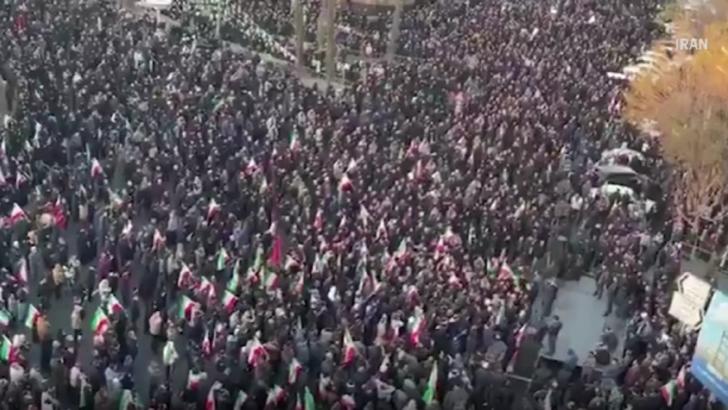
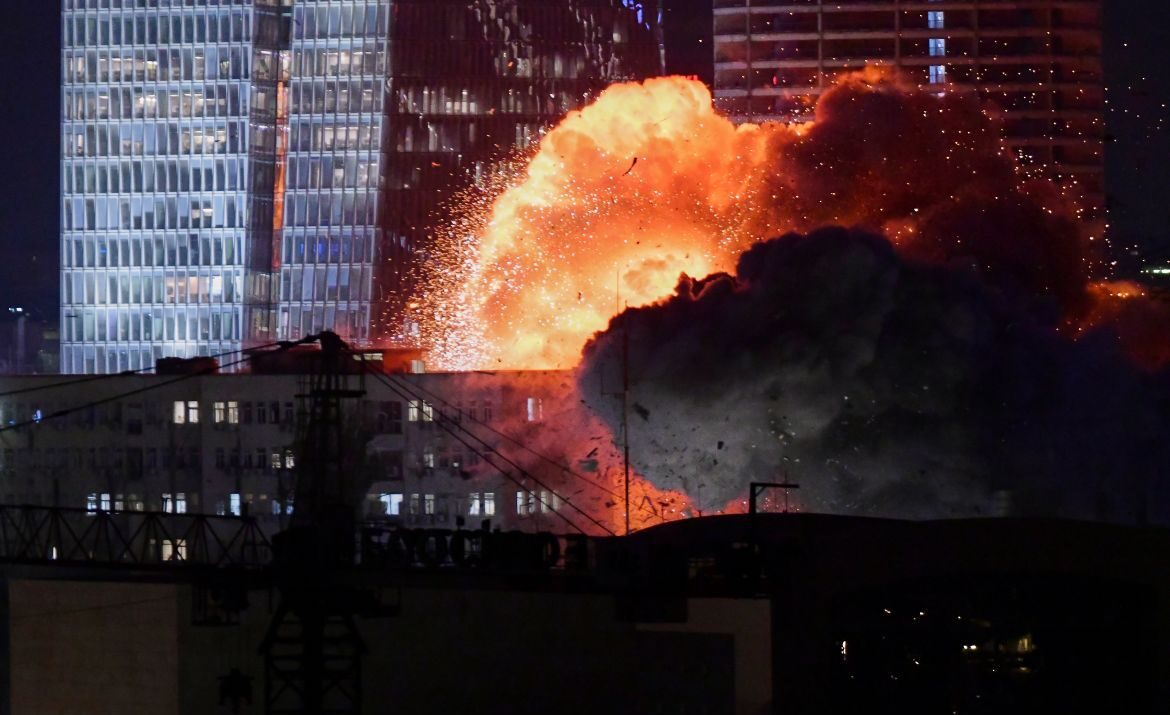
Iran’s latest wave of retaliatory strikes marks one of the most consequential escalations in the region in years, reshaping the strategic landscape across the Gulf and pushing the Middle East to the brink of a broader conflict. The strikes—launched in response to joint US‑Israeli attacks on Iranian territory—have targeted US military assets in Bahrain, Qatar, Kuwait, and the United Arab Emirates, as well as sites in Israel, triggering widespread alarm among regional governments and global powers.
⚠️ A Region Engulfed in Escalation
Iran’s Islamic Revolutionary Guard Corps (IRGC) declared that all American and Israeli military assets across the Middle East had become legitimate targets, vowing that operations would continue “relentlessly until the enemy is decisively defeated.”
This posture reflects a dramatic shift from calibrated proxy engagements to direct state‑to‑state confrontation.
The immediate trigger was a coordinated US‑Israeli strike on Iranian soil, which hit multiple cities—including Tehran, Isfahan, Tabriz, Kermanshah, and Qom—and reportedly struck the residence of Supreme Leader Ayatollah Ali Khamenei. Iranian state media later confirmed his death, along with dozens of senior officials, a development that has profoundly destabilized the country’s political core.
🎯 The Scope of Iran’s Retaliation
Iran’s counterstrikes have been extensive, hitting multiple countries that host US forces:
Bahrain — Missiles targeted the headquarters of the US Navy’s Fifth Fleet in Manama, with additional strikes hitting residential buildings. Footage showed a Shahed drone crashing into a tower block near the base.
Qatar — Authorities reported more than 65 ballistic missiles and 12 drones launched at Qatari territory. Most were intercepted, but two missiles reached Al Udeid Air Base, injuring at least 16 people.
United Arab Emirates — Abu Dhabi and Dubai were hit by waves of missiles and drones. One civilian was killed, and Dubai International Airport sustained damage, prompting widespread flight cancellations.
Kuwait — Air defenses engaged incoming missiles targeting a base hosting US forces, with civilian injuries reported.
Israel — Iran simultaneously launched drones and missiles toward Israeli territory, activating sirens across major cities including Tel Aviv.
The breadth of these attacks underscores Iran’s intent to demonstrate reach, resolve, and deterrent capability across the region.
🌍 International Reactions and Diplomatic Shockwaves
The global response has been swift and anxious:
Turkey condemned both the US‑Israeli strikes and Iran’s retaliation, urging urgent diplomacy to prevent further destabilization.
European leaders called for maximum restraint, warning of a “dangerous chain reaction” with devastating humanitarian consequences.
Saudi Arabia denounced Iran’s attacks as blatant violations of sovereignty, signaling deepening regional polarization.
Oman, a key mediator in nuclear negotiations, expressed dismay and warned that the conflict serves neither US interests nor global stability.
Airspace closures across Iran, Iraq, Israel, Syria, Kuwait, and the UAE have grounded flights and disrupted global aviation networks.
🔥 A Leadership Vacuum and the Prospect of Wider War
The reported death of Ayatollah Khamenei has introduced a volatile new dimension. With Iran’s leadership structure shaken, the IRGC has assumed a more assertive posture, promising “the most devastating offensive operation” against US and Israeli targets. This rhetoric, combined with the scale of the strikes, raises the risk of miscalculation on all sides.
Meanwhile, US President Donald Trump has warned Iran against further escalation, threatening unprecedented force if attacks continue.
The situation now resembles a multi‑front confrontation with the potential to draw in regional actors, disrupt global energy markets, and derail nuclear negotiations that had shown tentative progress just days earlier.
🧭 What This Means for the Middle East
The conflict has entered a dangerous new phase defined by:
Direct state‑to‑state confrontation, not proxy warfare
Simultaneous strikes across multiple countries, overwhelming regional defenses
Leadership instability in Iran, increasing unpredictability
Intensifying US‑Iran hostility, with Israel deeply embedded in the conflict
Mounting civilian risk, as debris, misfires, and urban strikes multiply
The coming days will likely determine whether this escalation stabilizes into a tense standoff or spirals into a broader regional war.