Afghanistan is entering one of its harshest winters in years just as international aid — a lifeline for millions — has been drastically reduced. The result is a growing humanitarian emergency marked by hunger, displacement, and worsening poverty across the country.
A Daily Struggle for Survival
In Kabul, 29‑year‑old Rahimullah spends ten hours a day selling socks from a small cart, earning the equivalent of only a few dollars. It’s barely enough to feed his family of five. Like millions of Afghans, he once relied on humanitarian assistance to survive, but those programs have been sharply scaled back.
The International Committee of the Red Cross estimates that nearly half of Afghanistan’s population — about 22.9 million people — needed aid in 2025. Cuts from major donors, including the United States, have halted large‑scale food distribution programs run by the World Food Program. As a result, more than 17 million Afghans are now facing crisis‑level hunger, three million more than last year.
Multiple Crises Converge
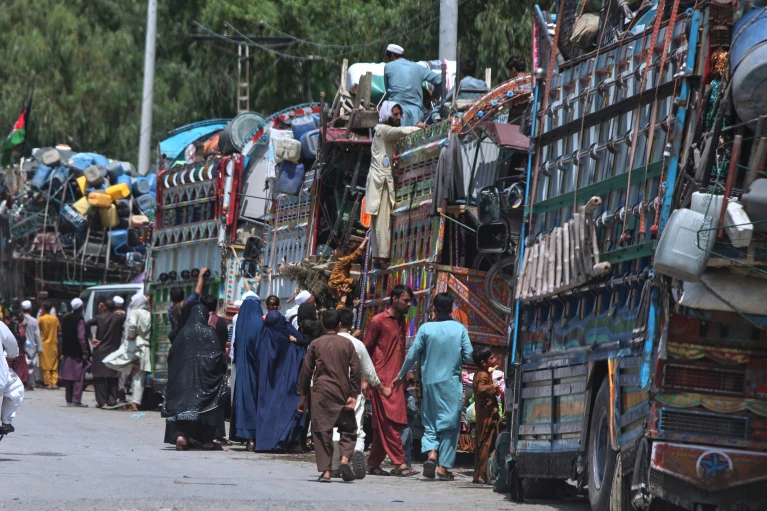
Afghanistan’s challenges are overlapping and severe: a collapsing economy, repeated droughts, two deadly earthquakes, and the return of millions of refugees expelled from neighboring countries. These pressures have strained already limited resources, from food supplies to housing.
U.N. humanitarian chief Tom Fletcher told the Security Council that this winter marks the first in years with almost no international food distribution. Only about one million of the most vulnerable Afghans received food aid during the 2025 lean season — a dramatic drop from 5.6 million the year before. Aid agencies have also been forced to cut thousands of jobs due to shrinking budgets.
Refugees Return to a Country in Crisis
Over the past four years, more than 7.1 million Afghan refugees have returned home, according to the Ministry of Refugees and Repatriation. Many, like Rahimullah, were deported from Pakistan or Iran and came back to a country unable to support them. He initially received cash and food assistance, but with aid programs slashed, he now struggles to afford even basic necessities. Rent for his modest two‑room home has nearly doubled, forcing his family to prepare for yet another move into uncertainty.
Before the Taliban takeover, both he and his wife worked. But with women now barred from most jobs, his wife has lost her income, deepening the family’s financial strain.
Families in the North Face the Brutal Cold
In Badakhshan province, Sherin Gul is caring for a family of twelve with almost no resources. The food aid they received in 2023 lasted only six months. Now, with her elderly husband unable to work and her son finding only occasional labor, the family often goes to bed hungry. Some nights, her younger children fall asleep after drinking only green tea, crying from hunger.
Gul, once employed as a cleaner, lost her job due to restrictions on women working. She says she has developed health problems and frequently feels ill. Winter only worsens their situation: snow stops construction work, cutting off her son’s income, while firewood and charcoal become unaffordable luxuries.
“If things continue like this, we may face severe hunger,” she said. “Surviving the cold will be very difficult”.