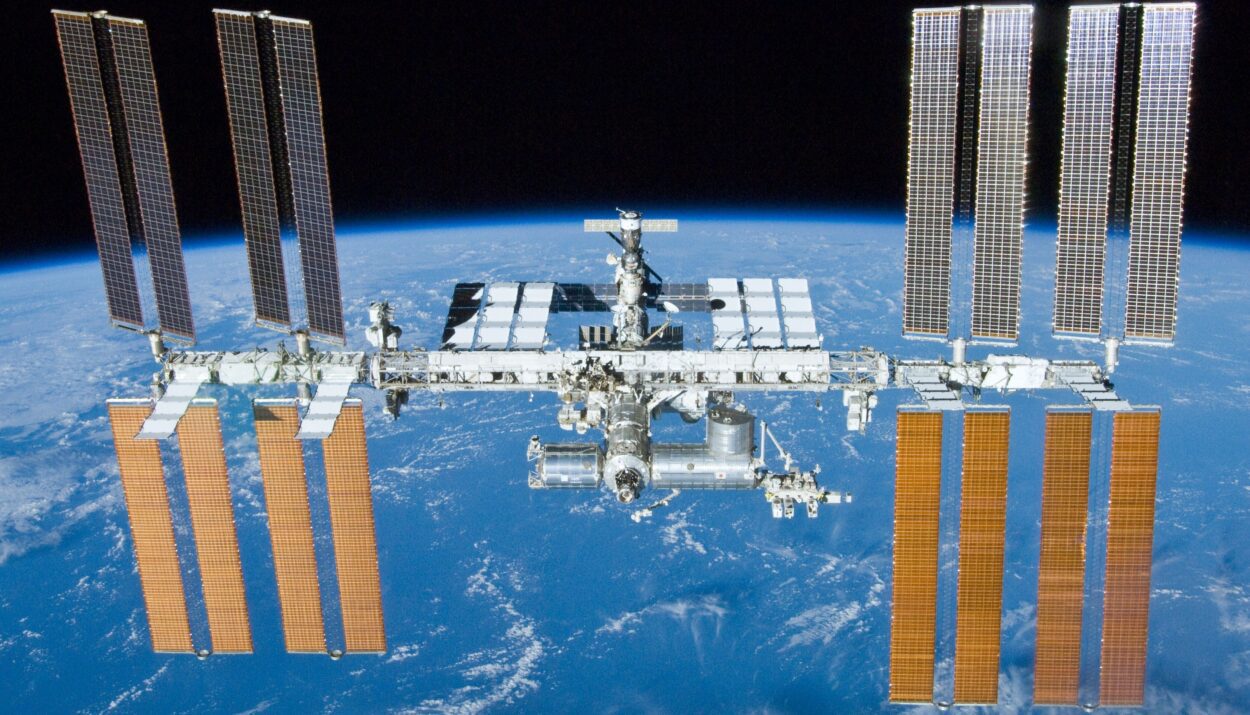
NASA has taken the rare step of ending an International Space Station (ISS) mission early after one of the four astronauts aboard experienced a significant medical issue. The affected crew member—whose identity and condition have not been disclosed—has been stabilized, but the agency is opting for a cautious and accelerated return to Earth.
🛰️ A Rare Early Return Order
NASA confirmed that the U.S.–Japanese–Russian crew of four will depart the ISS in the coming days, weeks ahead of their originally scheduled return. The decision follows the cancellation of the year’s first planned spacewalk due to the medical concern.
Dr. James Polk, NASA’s chief health and medical officer, emphasized that the situation is not an emergency evacuation, but the agency is “erring on the side of caution” to ensure the astronaut receives full diagnostic evaluation and care unavailable in microgravity.
👩🚀 Who Is Aboard Crew‑11?
The four astronauts returning early launched to the ISS in August aboard a SpaceX Crew Dragon spacecraft:
Zena Cardman (NASA)
Mike Fincke (NASA)
Kimiya Yui (JAXA)
Oleg Platonov (Roscosmos)
This mission marked the first spaceflight for Cardman and Platonov, the fourth for Fincke, and the second for Yui.
Fincke and Cardman had been scheduled to conduct a spacewalk to prepare the station for future solar array upgrades, but the operation was canceled following the medical incident.
🩺 What NASA Has Said About the Medical Issue
NASA has not identified the astronaut involved or the nature of the condition, citing strict medical privacy rules. Officials stressed:
The astronaut is stable
The issue is not related to ISS operations
The onboard medical suite is robust but not sufficient for full diagnostic workup in this case
Dr. Polk noted that while astronauts have previously been treated on the ISS for minor issues such as toothaches or ear pain, this marks the first medical evacuation in the station’s history.
🌍 What Happens Next?
NASA Administrator Jared Isaacman said the agency is coordinating a safe and expedited return plan and will provide updates as timelines are finalized.
Meanwhile, three other astronauts—NASA’s Chris Williams and Russia’s Sergei Mikaev and Sergei Kud‑Sverchkov—remain aboard the ISS and will continue operations until their scheduled return later in the year.
The early departure leaves the station temporarily with a reduced crew, a situation NASA has encountered only a handful of times since the ISS became continuously inhabited in 2000.
🔭 Broader Context
The incident comes as NASA prepares for major transitions in ISS operations, including:
Future crew rotations
Ongoing upgrades to station power systems
Long‑term planning for ISS deorbiting, currently targeted for 2030–2031 with SpaceX contracted to provide the deorbit vehicle
While the medical issue is not mission‑related, it underscores the inherent challenges of long‑duration human spaceflight and the limits of medical care in orbit.