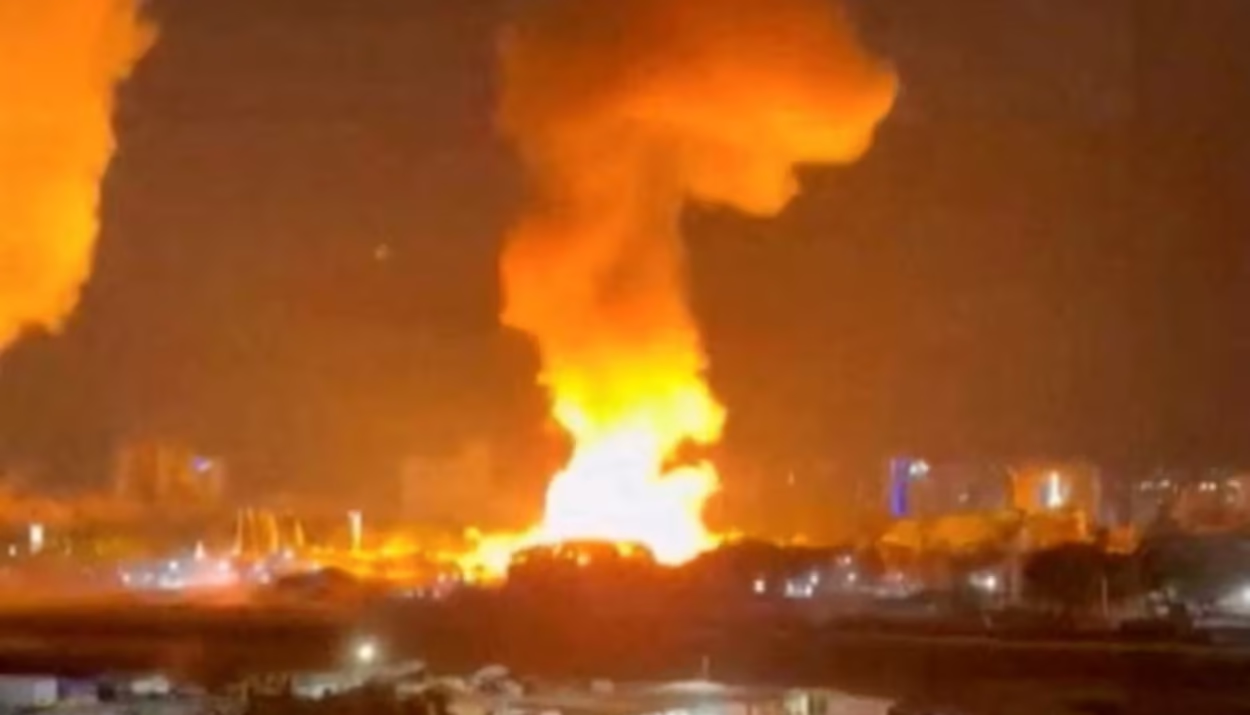
In a dramatic overnight operation early Saturday, the United States carried out extensive airstrikes on Caracas and several other Venezuelan cities. Hours later, President Donald Trump announced that Venezuelan leader Nicolás Maduro and his wife, Cilia Flores, had been detained and removed from the country.
The surprise attack, described by Trump as a “large‑scale strike,” marks the most significant escalation yet in Washington’s months‑long pressure campaign against Maduro. The president revealed the news on his social media platform, though he offered no immediate details on where the Venezuelan leader had been taken or who was now in charge in Caracas.
Residents in the capital reported hearing multiple explosions around 2 a.m., with strikes hitting key military sites such as La Carlota airbase and the Fuerte Tiuna complex. The Venezuelan government condemned the assault as an “imperialist attack” and urged citizens to mobilize in the streets, though turnout appeared limited as uncertainty spread.
Who Could Take Power Next?
With Maduro reportedly in US custody, attention has shifted to three senior figures within the regime:
Delcy Rodríguez, the vice president and constitutional successor, survived the strikes but lacks strong military backing.
Diosdado Cabello, the powerful interior minister long accused by Washington of leading the “Cartel of the Suns,” commands significant security forces but is a top US target.
Vladimir Padrino López, the defense minister, retains the loyalty of the armed forces and may be the most influential figure in determining the country’s next steps.
International Reactions
European leaders urged calm and respect for international law.
EU Commission President Ursula von der Leyen said the bloc supports a “peaceful and democratic transition.”
EU foreign policy chief Kaja Kallas called for restraint after speaking with US officials.
Spain, the Netherlands, and Belgium said they were closely monitoring the situation and coordinating with embassies in the region.
Russia and Iran sharply condemned the US action, calling it a violation of Venezuelan sovereignty. Colombia, meanwhile, deployed troops to its border, warning of potential instability and humanitarian fallout.
Inside Venezuela
Euronews sources in Caracas described a tense but relatively calm atmosphere after the strikes, with authorities setting up checkpoints across the city. Many residents rushed to supermarkets to stock up on food, and some stores reportedly ran out of basic items by midday.
US Legal Action
US Attorney General Pam Bondi confirmed that Maduro and his wife will face trial in the United States, citing longstanding narcoterrorism and drug‑trafficking charges. The US has accused Maduro and senior officials of running the “Cartel of the Suns,” a sprawling state‑linked drug network active since the late 1990s.
A Long Build‑Up
The operation follows months of escalating US actions, including:
Dozens of strikes on suspected narcoboats in the Caribbean and Pacific
The designation of the Cartel of the Suns as a terrorist organization
The seizure of multiple oil tankers
A CIA drone strike on a Venezuelan dock facility in late December
A US ban on flights over Venezuela hours before the attack
Trump is expected to give further details at a press conference later today.