Snowboarding is one of those rare sports that feels less like a discipline and more like a declaration of independence. Born from a mix of surf culture, skateboarding rebellion, and mountain tradition, it has grown into a global phenomenon that blends athleticism, creativity, and pure adrenaline.
From Counterculture to Olympic Stage
What began in the 1960s and 70s as an outsider experiment — a few dreamers strapping makeshift boards to their feet — has evolved into a fully recognized competitive sport. By the time snowboarding made its Olympic debut in 1998, it had already reshaped winter culture. Resorts that once banned snowboarders now build entire terrain parks dedicated to them.
Today, snowboarding spans multiple disciplines, each with its own personality:
Freestyle, the artistic heart of the sport, thrives on jumps, rails, and halfpipes.
Freeride celebrates the raw mountain — steep faces, deep powder, and creative lines.
Boardercross pits riders against each other in high‑speed, banked‑turn races.
Alpine snowboarding focuses on precision carving and speed.
This diversity is part of snowboarding’s charm: there is no single “right” way to ride.
The Feeling That Defines It
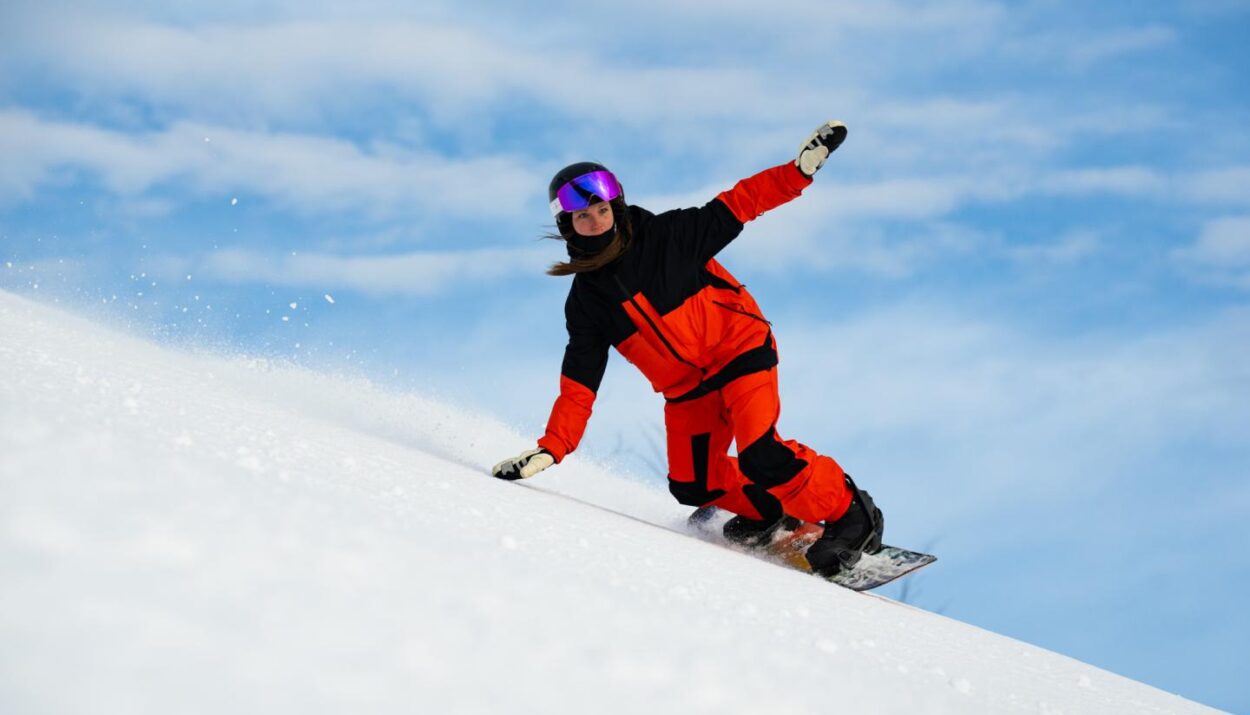
Ask any snowboarder why they ride, and the answer rarely involves medals or rankings. Instead, they talk about the sensation — the floating glide of powder, the weightless moment off a jump, the rhythm of carving turns like brushstrokes on snow.
Snowboarding is a sport built on flow. Unlike skiing’s rigid forward stance, snowboarding invites sideways movement, body rotation, and a dance‑like connection with the terrain. It rewards intuition as much as technique.
A Culture as Vibrant as the Sport
Snowboarding’s identity is inseparable from its culture. From the music and fashion to the DIY spirit of early board shapers, it has always carried a streak of creative defiance. Even as the sport has become more mainstream, that edge remains — visible in film projects, street‑style competitions, and the global community that forms around mountain towns each winter.
Training, Technique, and the Athlete’s Mindset
Behind the effortless style lies real athleticism. Snowboarders train balance, core strength, flexibility, and explosive power. They study snow conditions, weather patterns, and avalanche safety. At the elite level, riders push the boundaries of what the human body can do — spinning, flipping, and landing tricks that seemed impossible a decade ago.
Yet the sport remains accessible. Beginners can learn the basics in a single afternoon, and progression is addictive: each new skill opens the door to another.
A Sport for the Future
As climate change reshapes winter landscapes, snowboarding is adapting. Indoor snow centers, dry slopes, and off‑season training facilities keep the sport alive year‑round. Meanwhile, backcountry riders are increasingly focused on sustainability and mountain stewardship.
What hasn’t changed is the essence: snowboarding is still about freedom, expression, and the joy of sliding on snow.